# Exploring the Silent Drag Chain: Enhancing Industrial Automation with Efficiency and Quiet Operation
In the realm of industrial automation and machinery, the importance of reliable cable management cannot be overstated. Among the various components that ensure smooth operation, the **silent drag chain** stands out as a pivotal innovation. Designed to guide and protect cables and hoses in dynamic applications, silent drag chains combine durability, flexibility, and noise reduction—qualities essential for modern manufacturing environments where efficiency and workplace comfort are paramount.
This article delves deeply into the concept of the silent drag chain, its design principles, material considerations, installation best practices, and the key benefits it offers across industries. By understanding these facets, engineers, plant managers, and maintenance professionals can make informed decisions to optimize their systems for both performance and noise control.
---
## What is a Silent Drag Chain?
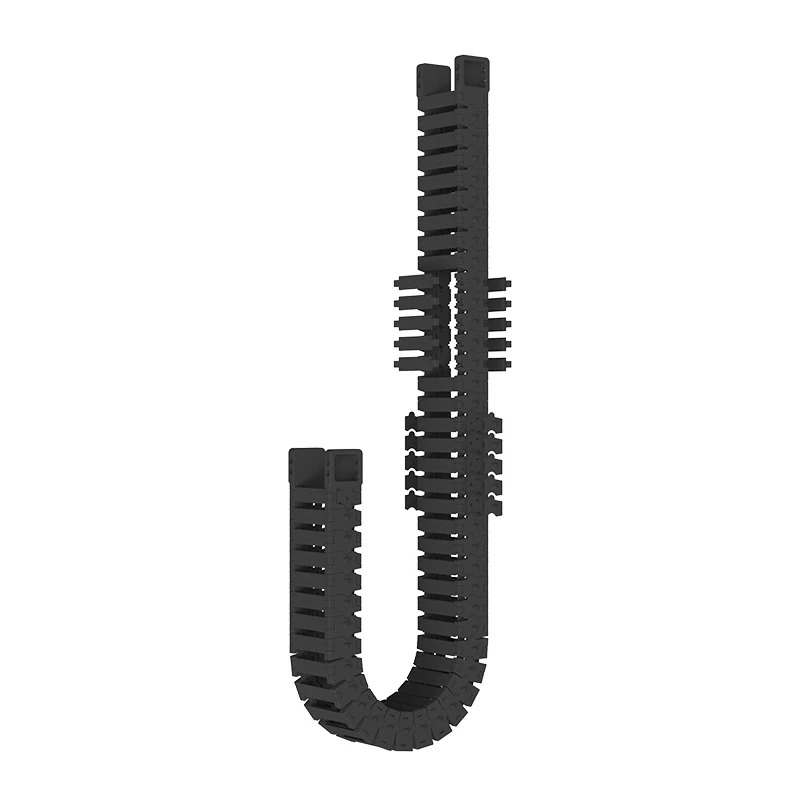
A **drag chain**, otherwise known as an energy chain or cable carrier, is a mechanical component used to guide flexible cables and hoses on moving machinery. Typically made from plastic or metal, drag chains prevent cables from tangling, bending sharply, or wearing prematurely due to friction or environmental exposure.
The **silent drag chain** is a specialized variant engineered to operate with minimal noise. As machinery speeds increase and production environments become more sensitive to acoustic pollution, silent drag chains address a crucial need by reducing operational noise without compromising mechanical integrity.
---
## Design Principles of Silent Drag Chains
The design of a silent drag chain involves a careful balance of material selection, mechanical geometry, and surface treatment to reduce friction and vibration—the primary sources of noise in traditional drag chains.
### Material Choices: pd-gray and pd-blue for Durability and Noise Dampening
Modern silent drag chains frequently utilize **high-performance polymers** characterized by their excellent wear resistance, low friction coefficients, and inherent noise absorption capabilities. Colors such as **pd-gray** and **pd-blue** are not merely aesthetic choices; they often indicate specific grades of polymer materials optimized for different temperature ranges, chemical resistances, and mechanical loads.
For instance, **pd-blue** might represent a fiber-reinforced nylon composite offering enhanced stiffness and longevity, while **pd-gray** may denote a flexible elastomer blend designed to absorb vibrations effectively.
### Structural Parameters: Width, Padding, and Background Considerations
The structural design includes parameters such as **width** and **padding** within the chain’s cross-section. Adequate width is essential to accommodate cables of various diameters comfortably, preventing excessive bending stresses. Meanwhile, internal padding or separators (sometimes colored in **pd-orange** or other hues) reduce cable movement within the chain, minimizing rattling and noise generation.
The **background** or base layer of the chain profile often incorporates a textured or coated surface to further dampen vibrations during motion.
### Font-Family and Branding Elements in Product Documentation
While seemingly unrelated, the inclusion of **font-family** styles in product documentation or website CSS styles (such as those named `silent-chain-section` or `silent-chain-header`) reflects the emphasis manufacturers place on clear communication and brand presentation. Professional and accessible documentation supports better understanding and promotes user confidence in the product.
---
## Installation and Layout Best Practices
Proper installation is critical to ensure that silent drag chains perform optimally. Incorrect setup can lead to premature wear, increased noise, and even system failures.
### Silent-Chain-Container: Max-Width and Margin Alignments
When installing silent drag chains on equipment, it's important to respect maximum length constraints (often reflected in CSS-like parameters such as `max-width`) to avoid sagging or excessive tension. Mounting points should maintain consistent margins to minimize stress concentrations at the chain ends.
### Silent-Chain-Header and Silent-Chain-Title: Clear Labeling and Safety Warnings
Clear labeling of drag chain sections in manuals or plant layouts (represented digitally by classes like `silent-chain-header` and `silent-chain-title`) helps maintenance teams quickly identify and service these components. Highlighting specifications such as **font-size**, **font-weight**, and color coding (e.g., blue and orange for emphasis) ensures critical information stands out.
---
## Benefits of Using Silent Drag Chains in Industrial Settings
### 1. Noise Reduction and Improved Workplace Comfort
The hallmark advantage of silent drag chains is their ability to operate quietly, which directly contributes to a more comfortable working environment. Noise pollution in factories not only affects worker wellbeing but can also violate regulatory standards. Silent chains help companies meet these requirements while maintaining high-speed operations.
### 2. Enhanced Cable and Hose Protection
By securely guiding cables and hoses, silent drag chains reduce mechanical stress caused by bending, twisting, or abrasion. This protection extends cable life and reduces downtime caused by unexpected failures.
### 3. Increased System Reliability and Maintenance Efficiency
With standardized dimensions and modular designs, silent drag chains simplify maintenance routines. Components can be replaced individually, and clear documentation (using **pd-text** and **pd-border** styles for clarity) ensures technicians understand specifications and installation guidelines.
### 4. Versatility Across Applications
Silent drag chains suit a broad spectrum of industries—automotive manufacturing, robotics, packaging, and medical device assembly. Their adaptability to different environmental conditions (temperature, chemical exposure, moisture) makes them indispensable in modern automated plants.
---
## Emerging Trends and Innovations
Manufacturers continuously evolve silent drag chain technology by integrating smart features such as embedded sensors to monitor wear and tension in real time. Surface coatings inspired by natural materials aim to further decrease friction and noise. Additionally, advancements in polymer science enable chains to withstand more extreme conditions while maintaining silence.
---
## Conclusion
The silent drag chain exemplifies how thoughtful engineering can elevate industrial automation by combining robust mechanical function with noise reduction. Its design—highlighted by material choices such as **pd-blue** and **pd-gray**, precise structural parameters including **width** and **padding**, and comprehensive documentation—ensures that cable management does not become a bottleneck or a source of workplace discomfort.
For organizations prioritizing productivity alongside employee health and regulatory compliance, investing in silent drag chains is a strategic decision. As technology progresses, these chains will continue to play an integral role in shaping quieter, safer, and more efficient manufacturing landscapes.
---
**Keywords:** silent drag chain, pd-blue, pd-gray, drag chain width, cable protection, noise reduction, industrial automation, silent-chain-section, silent-chain-container, silent-chain-header, silent-chain-title, pd-text, pd-border, pd-bg